Partners
Asian Institute of Maritime Studies
College of Our Lady of Mercy of Pulilan Foundation, Inc.
Immaculate Conception College of Balayan, Inc.
Meycauayan College
Zamboanga Peninsula Polytechnic State University
University of Caloocan City
Metro Manila College Novaliches
College of Subic Montessori
MYA House of Achievers
Reading Clinique
Asian Institute of Maritime Studies
College of Our Lady of Mercy of Pulilan Foundation, Inc.
Immaculate Conception College of Balayan, Inc.
Meycauayan College
Zamboanga Peninsula Polytechnic State University
University of Caloocan City
Metro Manila College Novaliches
College of Subic Montessori
MYA House of Achievers
Reading Clinique
GET International
Home About Courses
Message of the President Message of the Vice President Message of the Secretary Peer Reviewers
Institutional Membership Individual Professional Membership
Research Magazines News
Login Register
Home About Courses
Administration Message of the President Message of the Vice President Message of the Secretary Peer Reviewers
Linkages Institutional Membership Individual Professional Membership
Research Magazines News
Login Register
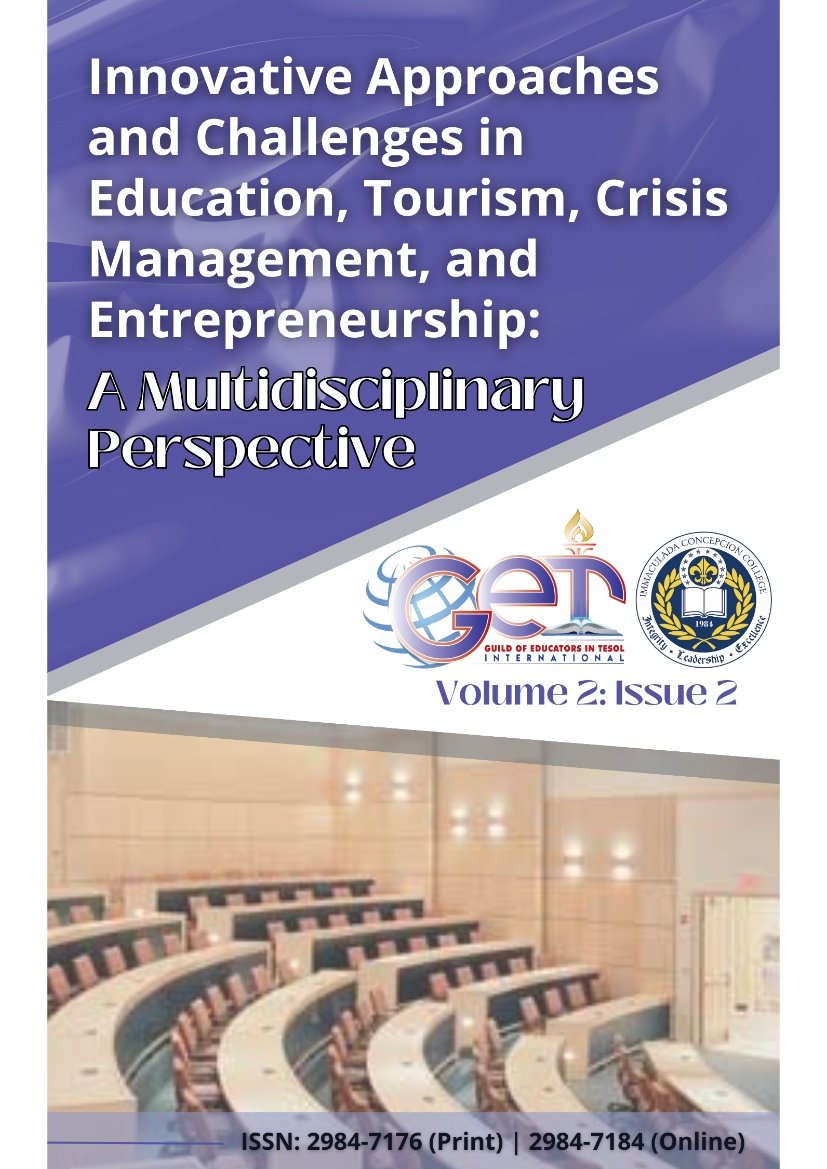
Vol. 2, Issue 2

Vol. 2, Issue 2

Volume 2 Issue 2 May 1, 2024
9 research paper(s) in this journal

Published Research Papers

THE RELATIONSHIP BETWEEN RISK MANAGEMENT STRATEGIES AND INVESTMENT BEHAVIOR OF GENERATION Z RETAIL INVESTORS IN STA. MESA, MANILA

Author(s): Michael Angelo F. Cruz, Leila M. De Mesa, Amanda E. Francia, Joanna Marie R. Fronda, Francesca Michaella B. Mesia, Angelo S. Pantaleon, Ralph Renz R. Peruda, Janela D. Quinto, Krysta Lyn T. Quisao, Maria Angelica Fe M. Secusana, Daren D. Cortez

Polytechnic University of the Philippines – Manila

Abstract

Risk Management Strategies and Investment Behaviors are considered important factors in the investing activities of the retail investors. This study seeks to determine the relationship between Risk Management Strategies and Investment Behavior of Generation Z retail investors. The study is a correlational research and purposive sampling was used to select the respondents for this study. Cochran’s formula was utilized to determine the total sample size or total number of respondents. Spearman’s Rank-Order Correlation was employed to assess the significant relationship of Risk Management Strategies and Investment Behaviors. Based on the results, it showed that risk management strategies have a significant relationship with one or more of the investment behaviors. Risk avoidance has a significant relationship with confirmation bias. Risk reduction has a significant relationship with all of the investment behaviors such as overconfidence, loss-aversion, recency bias, and confirmation bias. Risk transfer shows a significant relationship with only loss-aversion and confirmation bias. And lastly, risk acceptance also has a significant relationship with all of the investment behaviors. This study recommends exploring other types of behavioral biases under cognitive bias and emotional bias to determine their correlation with risk management strategies. Also, broadening the sample size, demographic scope, and geographic scope of the study can improve the generalizability of the study and provide a more comprehensive understanding of the relationship between investment behavior and risk management strategies. The researchers also recommend to utilize interviews and focus group discussions to gain an in-depth understanding of the underlying values and attitudes concerning investment behavior.

Keywords

Risk Management Strategies Investment Behaviors Generation Z Retail Investors Polytechnic University of the Philippines

Citation

Cruz, M. A., De Mesa, L., Francia, A., Fronda, J. M., Mesia, F. M., Pantaleon, A., Peruda, R. R., Quinto, J., Quisao, K. L., Secusana, M. A., & Cortez, D. (2024). THE RELATIONSHIP BETWEEN RISK MANAGEMENT STRATEGIES AND INVESTMENT BEHAVIOR OF GENERATION Z RETAIL INVESTORS IN STA. MESA, MANILA. GUILD OF EDUCATORS IN TESOL INTERNATIONAL RESEARCH JOURNAL, 2(2), 174–195.

DOI: 10.5281/zenodo.12216441 Download PDF

ADD-TO-CART: APPLIED FINANCIAL LITERACY AND ONLINE PURCHASE DECISION-MAKING OF GRADE 12 STUDENTS

Author(s): Gabriella P. Macalindong, Diana Lyn E. Cadacio, Karla Althea B. Oñate, Ronarica C. Delena, Jhon Jhomark C. Martinez, Meilin B. Hernandez, Jowenie A. Mangarin

Immaculate Conception College of Balayan

Abstract

Financial literacy is becoming a pivotal skill in navigating the marketplaces within the predominant rising digital branches of trading domains; however, there remains a concerning gap in the purchasing behavior of adolescents, who are its primary users. With this in mind, the main objective of our research is to determine whether there is a relationship between a student’s level of financial literacy and their online purchase decision-making. The researchers employed an explanatory mixed approach and purposive sampling to identify respondents from Immaculate Conception College of Balayan, Inc. A 5-point Likert scale survey was utilized to collect data from 66 respondents, followed by semi-structured interviews with 10 selected participants. The results showed a moderately positive correlation between a student’s financial literacy and online purchase decisions, as determined by the Pearson correlation coefficient. Thus, the thematic analysis revealed that respondents generally have good financial literacy, emphasizing factors like pricing, online reviews, and product ratings when making digital marketplace decisions. However, there are notable gaps in their understanding of basic financial concepts and their ability to apply them in real-life situations. To effectively enhance students’ financial literacy and online purchasing decisions, a holistic approach is necessary, including targeted interventions, practical applications, and continuous adaptation to evolving consumer behaviors. Educational institutions, policymakers, and stakeholders should work together to create comprehensive programs that provide students with the knowledge, skills, and attitudes needed to negotiate real-world financial situations and make sound judgments in the digital commerce ecosystem. By emphasizing practical learning, key financial concepts, and trust- building approaches, educators may empower students to become responsible consumers capable of managing their resources successfully and ethically.

Keywords

Financial Literacy Online purchase decisions Explanatory mixed approach Real-life situations

Citation

Macanlindong, G., Cadacio, D. L., Onate, K. A., Delena, R., Martinez, J. J., Hernandez, M., & Mangarin, J. (2024). #ADD-TO-CART: APPLIED FINANCIAL LITERACY AND ONLINE PURCHASE DECISION-MAKING OF GRADE 12 STUDENTS. GUILD OF EDUCATORS IN TESOL INTERNATIONAL RESEARCH JOURNAL, 2(2), 149–173.

DOI: 10.5281/zenodo.12087043 Download PDF

PINK DOESN’T MEAN WEAK: UNVEILING THE TRIUMPHS AND CHALLENGES OF WOMEN ENTREPRENEURS IN BALAYAN, BATANGAS

Author(s): Jessrell Elaine B. Cerrado, Jhian Carl Q. Arquileta, John Mark B. Barsaga, Mirko G. Dastas, Frank D. Mendoza, Sean Jacob B. Relacion, Princess Joy M. Banaag, Faith Cedwin Louis E. Belarmino, Stephanie M. Concepcio , Irish Kate C. De Castro, Jerseys Eanne

Immaculate Conception College of Balayan

Abstract

The world of entrepreneurship has historically been linked with taking risks and the potential for significant rewards. However, there persists a notable gender imbalance in the entrepreneurial landscape, wherein women entrepreneurs remain a minority. Women navigating the entrepreneurial path encounter distinct challenges, setting their experiences apart from their male counterparts. In Balayan, Batangas, despite strides towards gender equality, women entrepreneurs continue to face challenges in the entrepreneurial landscape. This qualitative study delves into the experiences of 10 successful female entrepreneurs who met specific criteria. Accordingly, semi-structured interviews are conducted, exploring various aspects of participants’ experiences and revealing their motivations, achievements, challenges, and strategies. Thematic analysis reveals the connection between familial, community-driven, and personal motivations that drive these entrepreneurs forward. Despite facing obstacles such as financial constraints and gender biases, they prioritize financial gains and personal growth. With resilience, innovation, and dedication, these women overcome challenges and achieve success, utilizing support networks and online marketing strategies to their advantage. Recommendations include empowering women in entrepreneurship, strengthening support networks, introducing tailored financial literacy programs, and advocating against gender biases. Implement skill development initiatives and provide specialized education in online marketing. Engage in policy advocacy, celebrate success stories, and continuously research challenges and successes. Foster collaborative partnerships between businesses, educational institutions, and communities, and advocate for increased funding opportunities for sustainable growth. This research emphasizes the strength and capabilities of women entrepreneurs in Balayan, Batangas, affirming that “pink doesn’t mean weak.”

Keywords

Women entrepreneurship Gender equality Female entrepreneurs Success stories Balayan Batangas

Citation

Cerrado, J. E., Arquileta, J. C., Barsaga, J. M., Dastas, M., Mendoza, F., Relacion, S. J., Banaag, P. J., Belarnimo, F. C. L., Concepcion, S., De Castro, I. K., Javier, J. E., Quizzagan, P. E., Villanobo, L. G., & Mangarin, J. (2024). PINK DOESN’T MEAN WEAK: UNVEILING THE TRIUMPHS AND CHALLENGES OF WOMEN ENTREPRENEURS IN BALAYAN, BATANGAS. GUILD OF EDUCATORS IN TESOL INTERNATIONAL RESEARCH JOURNAL, 2(2), 126– 148.

DOI: 10.5281/zenodo.12082805 Download PDF

SCHOOL MANAGEMENT DURING COVID-19 PANDEMIC: A SYSTEMATIC REVIEW ON THE EXPERIENCES OF SCHOOL LEADERS

Author(s): Jowenie A. Mangarin

Immaculate Conception College of Balayan

Abstract

This systematic literature review offers valuable perspectives on the challenges faced by educational administrators amidst COVID-19, shedding light on key themes and concerns that arose during this unprecedented period. By focusing on emerging trends in school leaders’ experiences, this study not only informs future research but also provides guidance for academic and educational practices. Drawing upon an analysis of 16 articles from peer- reviewed publications spanning the period from 2010 to 2021, this review provides a comprehensive overview of research themes, approaches, settings, and school management systems related to the Covid-19 pandemic. Notably, most of the articles were published in the Journal of School Administration Research and Development, reflecting a significant scholarly interest in this topic. Additionally, almost half of the studies were conducted in the United States, indicating a geographical concentration of research efforts in this area. The analysis reveals that the primary focus of the literature centers around technological support and the professional development of teachers, highlighting the critical role of these factors in navigating the challenges posed by the pandemic. Moreover, the predominant use of phenomenological design and structured interviews among principals and school administrators underscores the qualitative nature of much of the research in this field. While this review offers valuable insights, it is essential to acknowledge its limitations, including potential biases in the selection of articles and the evolving nature of the Covid- 19 pandemic. Future research endeavors could consider longitudinal studies to track the long-term impacts of the pandemic on educational leadership and to identify strategies for resilience and adaptation in the face of ongoing challenges. This research contributes significantly to our understanding of the difficulties encountered by school leaders throughout the COVID-19 crisis and provides valuable insights that can inform future educational practices and policies.

Keywords

School Leaders School Management System Systematic Literature Review

Citation

Mangarin, J. (2024). SCHOOL MANAGEMENT DURING COVID-19 PANDEMIC: A SYSTEMATIC REVIEW ON THE EXPERIENCES OF SCHOOL LEADERS. GUILD OF EDUCATORS IN TESOL INTERNATIONAL RESEARCH JOURNAL, 2(2), 106–125.

DOI: 10.5281/zenodo.12081988 Download PDF

MITIGATING THE IMPACT OF NATURAL HAZARDS: A HOTEL PREPAREDNESS AND RESPONSE STRATEGIES

Author(s): Marchie L. Garcia, Jelene P. Abellera, Kaithleen C. Aguzar, Janice Grace T. Magahis, Claire Andrey G. Uriarte, Jowenie A. Mangarin

Immaculate Conception College of Balayan

Abstract

This study investigates strategies for hotels situated near Taal Volcano to lessen the impact of natural disasters, specifically volcanic eruptions. The hospitality industry in this region faces a unique threat due to the volcano’s activity. This research addressed a critical gap by implementing effective preparedness and response plans. A qualitative multiple case study design was employed by the researchers. Seven (7) hotel executives from different hotels situated in Batangas who had directly encountered and navigated the impacts of natural disasters were selected through the purposive sampling technique. The findings revealed several common natural hazards faced by hotels include Taal volcano eruptions, typhoons, earthquakes, ashfall, and sulfur dioxide emissions. Despite of this natural hazards, hotel executives were still capable of safeguarding their guests by implementing strategies including evacuation procedures, staff training, communication and coordination and preventive measures. In conclusion, to overcome the challenges identified in disaster preparedness, hotels in Batangas should consider several strategic actions. Hotels are recommended to take several crucial actions to enhance their preparedness and response capabilities to natural hazards. Adhering to safety regulations will help hotels maintain a high level of preparedness and minimize risks associated with natural hazards, ultimately safeguarding the well-being of guests and staff alike.

Keywords

Natural Hazards Volcanic Activity Safety and Strategic Actions

Citation

Garcia, M., Abellera, J., Aguzar, K., Magahis, J. G., Uriarte, C. A., & Mangarin, J. (2024). MITIGATING THE IMPACT OF NATURAL HAZRADS: A HOTEL PREPAREDNESS AND RESPONSE STRATEGIES. GUILD OF EDUCATORS IN TESOL INTERNATIONAL RESEARCH JOURNAL, 2(2), 81– 105.

DOI: 10.5281/zenodo.12078131 Download PDF

OPTIMIZATION OF DESTINATION IMAGE: THE ENVIRONMENTAL IMPLICATIONS OF TOURISTS ARRIVALS IN MATABUNGKAY BEACH, LIAN

Author(s): James Edrian M. Cotacte, Ma. Jane Dimple N. Anit, Luzielle F. Fuerte, Maria Aurora R. Marasigan, Jowenie A. Mangarin

Immaculate Conception College of Balayan

Abstract

This qualitative case study investigates the environmental implications of tourist arrivals in Matabungkay Beach, Lian, and their impact on the destination image. Through in-depth interviews with seven key stakeholders, including local residents, business owners, and environmental activists, the study explores perceptions, concerns, and potential solutions regarding the intersection of tourism and environmental sustainability. Findings reveal a complex relationship between tourism and environmental degradation, with participants expressing concerns about poor waste management, impacts on destination image, and health concerns. These challenges not only threaten the natural beauty and biodiversity of the area but also tarnish the destination’s image, affecting its appeal to tourists and potential investors. Despite these challenges, participants highlight existing initiatives and potential solutions, including community-based conservation efforts, sustainable tourism practices, and enhanced regulations. Collaboration among stakeholders is emphasized as crucial for achieving a balance between tourism development and environmental preservation. The study underscores the need for comprehensive strategies includes formulated an ordinance for comprehensive waste management and pollution control ordinance to optimize the destination image of Matabungkay Beach while addressing its environmental challenges. By integrating sustainable practices and fostering community engagement, the destination can enhance its appeal while safeguarding its natural resources for future generations.

Keywords

Environmental Implications Destination Image Tourist Arrivals and Matabungkay Beach

Citation

Cotacte, J., Anit, J. D., Fuerte, L., Marasigan, M. A., & Mangarin, J. (2024). OPTIMIZATION OF DESTINATION IMAGE: THE ENVIRONMENTAL IMPLICATIONS OF TOURISTS ARRIVALS IN MATABUNGKAY BEACH, LIAN. GUILD OF EDUCATORS IN TESOL INTERNATIONAL RESEARCH JOURNAL, 2(2), 61–80.

DOI: 10.5281/zenodo.12076197 Download PDF

THE DIARY OF BIDA-BIDA: UNDERSTANDING THE CONSEQUENCES OF ‘SMART SHAMING’ AMONG SENIOR HIGH SCHOOL STUDENT LEADERS

Author(s): Anika M. Untalan, Alisson A. Abanes, Noel T. Bambao Jr., Landher J. Baon, John Cyrus M. Barrientos, John Carl C. Carenan, Rhaniel Joseph C. Lanic, Troy Christian D. Ortego, Lhei Ashera C. Bayugo, Sara S. Espole, Nicole A. Sale, Janelle D. Samillano, Candy

Immaculate Conception College of Balayan

Abstract

Academic excellence and intelligence are commonly lauded as commendable attributes synonymous with success. However, a disconcerting trend has surfaced within educational institutions, challenging the prevailing narrative of scholastic accomplishment—smart shaming. This research delves into the increasing concern of smart shaming within educational settings, particularly at Immaculate Conception College of Balayan, Inc., questioning the predominant emphasis on academic excellence and intelligence. A qualitative case study design, along with judgmental sampling, was employed to examine fifteen (15) student leaders who had experienced smart shaming on campus. Thematic analysis revealed that sarcastic remarks including “edi wow,” “Okay ikaw na matalino,” “bida- bida,” and “sipsip” were a prevalent manifestation of smart shaming, adversely affecting emotional well-being, academic and leadership prowess, mental health, and self-perception. Coping mechanisms, predominantly centered around ignoring and focusing on goals, were identified. The findings underscore the imperative for educators to remain vigilant regarding instances of smart shaming in classrooms, promoting open communication to ensure student well-being. Additionally, guidance counselors play a pivotal role in aiding students in effectively navigating the repercussions of smart shaming. This study advocates for proactive programs and interventions to address and alleviate the deleterious effects of smart shaming on students.

Keywords

Smart shaming Academic excellence Student leaders Coping mechanisms Educational interventions.

Citation

Untalan, A., Abanes, A., Bambao, N., Baon, L., Barrientos, J. C., Carenan, J. C., Lanic, R. J., Ortego, T. C., Bayugo, L. A., Espole, S., Sale, N., Samillano, J., Simballa, C. R., & Mangarin, J. (2024). THE DIARY OF BIDA-BIDA: UNDERSTANDING THE CONSEQUENCES OF ‘SMART SHAMING’ AMONG SENIOR HIGH SCHOOL STUDENT LEADERS. GUILD OF EDUCATORS IN TESOL INTERNATIONAL RESEARCH JOURNAL, 2(2), 47–60.

DOI: 10.5281/zenodo.12072900 Download PDF

PERCEPTIONS OF MATHEMATICS’ STUDENT TEACHERS IN THE IMPLEMENTATION OF GAMIFICATION IN SECONDARY SCHOOL AT NASUGBU, BATANGAS

Author(s): Angel Joie G. Feleo, Jowenie A. Mangarin, Mary Ann N. Cahayon

Immaculate Conception College of Balayan

Abstract

This study delved into the perceptions of Mathematics’ student teachers regarding the implementation of gamification in secondary schools at Nasugbu, Batangas. This research investigates the rising global trend of implementing gamification in education, particularly in Mathematics teaching, to address contemporary learner needs by examining student teachers’ use of gamified activities, their design factors, encountered challenges, and perceived benefits. Purposive sampling was utilized in a multiple-case study approach to select ten (10) secondary school Mathematics’ student teachers engaged in practice teaching in Nasugbu, Batangas. Qualitative findings revealed common gamified activities employed by student teachers, emphasizing the importance of student-centered design, alignment with learning objectives, student engagement, assessment, and adaptation to the classroom context. Challenges faced by student teachers in integrating gamification included technical limitations, sustaining engagement, time management, and addressing diverse learning styles. Despite these challenges, integrating gamification showed benefits such as increased engagement, improved learning outcomes, reduced math anxiety, and enhanced attitudes towards Mathematics. In conclusion, gamified activities play a significant role in enhancing student engagement and learning outcomes in Mathematics classrooms. The findings suggest student teachers to explore and integrate gamified activities into Mathematics lessons to create engaging environments supporting student success.

Keywords

Gamification Mathematics Education Student Teachers.

Citation

Feleo, A. J., Mangarin, J., & Cahayon, M. A. (2024). PERCEPTIONS OF MATHEMATICS’ STUDENT TEACHERS IN THE IMPLEMENTATION OF GAMIFICATION IN SECONDARY SCHOOL AT NASUGBU, BATANGAS. GUILD OF EDUCATORS IN TESOL INTERNATIONAL RESEARCH JOURNAL, 2(2), 22–46.

DOI: 10.5281/zenodo.1206938 Download PDF

“MALAYO PA, PERO MALAYO NA”: A CASE STUDY OF ELEMENTARY PRE-SERVICE TEACHERS EMOTIONAL EXPERIENCES DURING INTERNSHIP

Author(s): Kaye Antonette M. Pineda, Aileen B. Briones, Nicole Marionne B. Gonzales, Haizel E. Pillazar, Mary Jane A. Ysug, Carina E. Ilao

Immaculate Conception College of Balayan

Abstract

Teaching Internship is an integral journey for pre-service teachers, providing a platform to apply academic knowledge in the workplace. However, emotional experiences are prevalent during the internship, posing challenges for pre-service teachers. Consequently, this study aims to understand the emotional experiences of pre-service teachers during their internship and assess how it impacts their performance. The current study employed a qualitative method, adhering to a multiple case study design. Ten (10) fourth-year elementary pre-service teachers from Immaculate Conception College of Balayan Inc. were selected using purposive sampling technique. Then thematic analysis was utilized to analyze the data. Results revealed that participants experienced both positive and negative emotional experiences that challenge their self-confidence, time management, teaching abilities, and relationship with cooperating teachers and students. These results indicate that emotional experiences are highly evident during teaching internship. With this, the suggested advocacy plan in this study proposes interventions such as seminars, workshops, and tours to enhance the emotional resilience, emotional support, and emotional management of pre-service teachers. Furthermore, future research is advised to utilize diverse methodological techniques and include a larger sample of pre-service teachers from various majors to encompass broader perspectives on the discussed topic, building upon the findings of the current study.

Keywords

Emotional experiences Teaching internship Pre-service teachers

Citation

Pineda, K. A., Briones, A., Gonzales, N. M., Pillazar, H., Ysug, M. J., & Ilao, C. (2024). “MALAYO PA, PERO MALAYO NA”: A CASE STUDY OF ELEMENTARY PRE-SERVICE TEACHERS EMOTIONAL EXPERIENCES DURING INTERNSHIP. GUILD OF EDUCATORS IN TESOL INTERNATIONAL RESEARCH JOURNAL, 2(2), 1– 21

DOI: 10.5281/zenodo.12063865 Download PDF
Back to All Journals

Quick Links

  • About Us
  • Contact Us
  • Courses
  • Research
  • Magazines
  • Publication Policies

Contact

  • 9036 Tinejero Brgy. Pulilan, Bulacan
  • tesol8international@gmail.com

Opening Hours

Monday - Friday:

09:00 AM - 09:00 PM

Saturday:

09:00 AM - 12:00 PM

Sunday:

Closed

Visitors

130 Total Visitors
United States US 66
Philippines PH 25
Singapore SG 7
China CN 6
South Korea KR 4
Japan JP 3
Canada CA 3
Austria AT 3
Malaysia MY 2
Australia AU 2
United Kingdom GB 1
Sweden SE 1

© 2026 GET International. All rights reserved.

Home Help Privacy Cookies Terms Refunds

We use cookies

Some are needed to run the site and keep you signed in. With your permission we also use analytics cookies to see which pages and courses are useful. Nothing optional is set unless you accept. Read our Cookie Policy and Privacy Policy.