Partners
Asian Institute of Maritime Studies
College of Our Lady of Mercy of Pulilan Foundation, Inc.
Immaculate Conception College of Balayan, Inc.
Meycauayan College
Zamboanga Peninsula Polytechnic State University
University of Caloocan City
Metro Manila College Novaliches
College of Subic Montessori
MYA House of Achievers
Reading Clinique
Asian Institute of Maritime Studies
College of Our Lady of Mercy of Pulilan Foundation, Inc.
Immaculate Conception College of Balayan, Inc.
Meycauayan College
Zamboanga Peninsula Polytechnic State University
University of Caloocan City
Metro Manila College Novaliches
College of Subic Montessori
MYA House of Achievers
Reading Clinique
GET International
Home About Courses
Message of the President Message of the Vice President Message of the Secretary Peer Reviewers
Institutional Membership Individual Professional Membership
Research Magazines News
Login Register
Home About Courses
Administration Message of the President Message of the Vice President Message of the Secretary Peer Reviewers
Linkages Institutional Membership Individual Professional Membership
Research Magazines News
Login Register
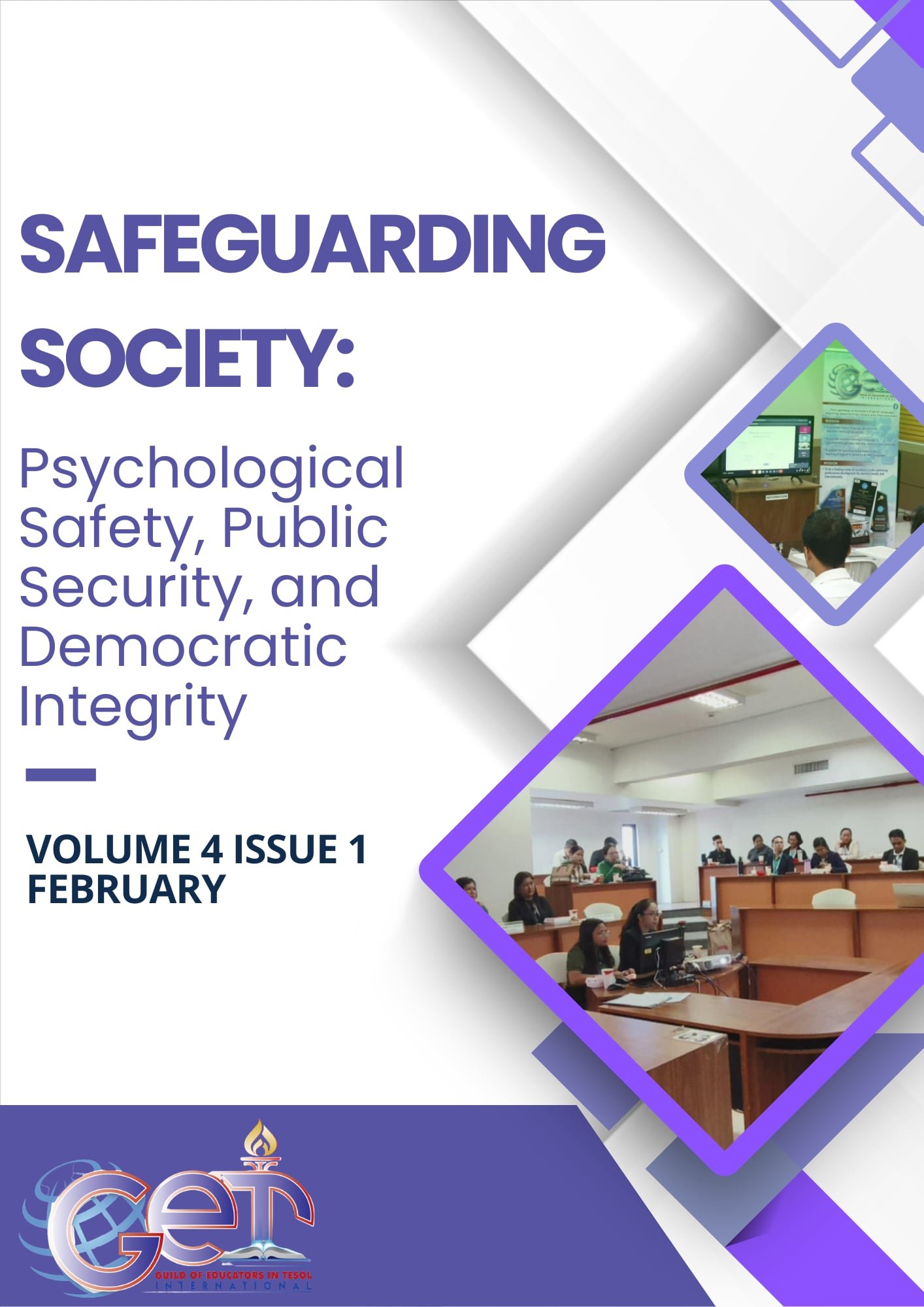
Vol. 4, Issue 1

Vol. 4, Issue 1

Volume 4 Issue 1 February 28, 2026
9 research paper(s) in this journal

Published Research Papers

BREAKING SILENCE: MENTAL HEALTH LITERACY, HELP SEEKING, AND SELF-CARE IN FILIPINO COLLEGE LIFE

Author(s): Hazel S. Martinez, Eliza Mari M. Perez, Joan M. San Juan, Maria Angelica B. Tabimina, Irish Mae T. Venturillo

Arellano University

Abstract

This study examined the relationship between mental health literacy, help-seeking preferences, and self-care practices among college students of Arellano University. A descriptive-correlational research design was used. Three instruments: the Mental Health Literacy Scale – Filipino Version (MHLS-F), the General Help-Seeking Questionnaire (GHSQ), and the Self-Care Scale (SCS) were used. The results showed a moderate understanding of mental health among the students, indicating an average level of awareness and knowledge about mental health issues. The respondents were able to recognize common mental disorders and knew where to find information or professional help. Positive attitudes toward seeking help were evident, although some stigma and neutral acceptance toward individuals with mental illness remained present. Help-seeking preferences were found to be moderate, with students more likely to seek help from intimate partners, mental health professionals, and doctors. Self-care practices were also moderate, suggesting that self-care is valued but not practiced consistently. The correlation analysis revealed a very weak but significant relationship among mental health literacy, help-seeking preferences, and self-care. The study concludes that college students of Arellano University possess a moderate understanding of mental health and show openness toward professional help-seeking, yet stigma and irregular self-care continue to be evident. It is recommended that the university strengthen mental health education and awareness programs, enhance access to counseling services, and promote consistent self-care and peer support among students.

Keywords

Mental Health Literacy Help-Seeking Preferences Self-care

Citation

Martinez, H. S., Perez, E. M. M., San Juan, J. M., Tabimina, M. A. B., & Venturillo, I. M. T. (2026). BREAKING SILENCE: MENTAL HEALTH LITERACY, HELP SEEKING, AND SELF-CARE IN FILIPINO COLLEGE LIFE. GET INTERNATIONAL RESEARCH JOURNAL, 4(1), 1–26.

DOI: 10.5281/zenodo.18770752 Download PDF

DOES SECTION 7 OF REPUBLIC ACT 11036 IMPROVE NURSING PERSONNEL JOB SATISFACTION? EVIDENCE FROM NCMH AND POLICY FIXES

Author(s): Nathan Earl C. Antazo, Lyka Anne B. Gonzalez, Lara Allyxandra C. Magtibay, Horacio Romero

Arellano University, National University

Abstract

This study evaluates Section 7 of Republic Act No. 11036, also known as the Mental Health Act, on the job satisfaction among nursing personnel at the National Center for Mental Health (NCMH), as basis to propose policy recommendations. Section 7 highlighted the rights, well-being, and support for mental health professionals in addressing the demands of mental healthcare delivery, and as the nursing personnel play a crucial role in implementing mental health policies, the effects of the policy on their job satisfaction remain underexplored. A mixed-methods approach were used, with surveys and interviews in a representative sample of NCMH nursing personnel were employed. Quantitative data measured the job satisfaction among the nursing staff and its relationship to Section 7 while qualitative findings provided deeper insights into staff experiences and perceptions of the provision’s implementation. The study concluded that there is a strong positive relationship between the awareness and understanding of Section 7 and job satisfaction among nursing personnel; however, as the provision was aligned with the nursing personnel's expectations on their rights and well-being, the implementation aspect was viewed as inconsistent and inadequately resourced. A significant factor that affected the job satisfaction levels among nursing personnel are workload imbalance and limited staff support. And despite of these findings, the respondents still showed a high level of professional commitment, underscoring the importance for a targeted institutional support. Therefore, to ensure effective implementation of Section 7, increase resource allocation and structured mental health support programs for personnel and monitoring systems were recommended.

Keywords

Mental Health Act Section 7 job satisfaction mental health policy National Center for Mental Health (NCMH) nursing personnel policy implementation workplace well–being

Citation

Antazo, N. E. C., Gonzalez, L. A. B., Magtibay, L. A. C., & Romero, H. (2026). DOES SECTION 7 OF REPUBLIC ACT 11036 IMPROVE NURSING PERSONNEL JOB SATISFACTION? EVIDENCE FROM NCMH AND POLICY FIXES. GET INTERNATIONAL RESEARCH JOURNAL, 4(1), 27–47.

DOI: 10.5281/zenodo.18771513 Download PDF

FOSTERING GENDER SENSITIVITY: AWARENESS AND PERCEPTIONS AMONG POLICE OFFICERS OF THE POLICE TRAINING CENTER, CORDILLERA ADMINISTRATIVE REGION

Author(s): Cristina Ollero Geneta

Philippine College of Criminology

Abstract

This study explored the level of gender sensitivity and equality awareness among police recruits at the Police Training Center Cordillera Administrative Region (PTC-CAR) in Baguio City, Philippines. Grounded in institutional theory, the research aimed to assess recruits’ awareness across five dimensions—awareness and knowledge, attitudes and beliefs, policy and legal frameworks, communication, and access and opportunities—and to evaluate the perceived importance, effectiveness, and institutional implementation of gender sensitivity in their training experience. Using a descriptive-quantitative research design, the study gathered data through a structured survey questionnaire administered to police recruits currently enrolled at PTC-CAR. Data were analyzed through descriptive statistics, and findings were interpreted using institutional perspectives on cognitive, normative, and regulative processes. The results showed generally high levels of gender awareness, especially in the cognitive and attitudinal domains. However, gaps were noted in the institutional application of gender policies and access to gender-sensitive opportunities. Recruits acknowledged the relevance of gender sensitivity to their professional development but also highlighted the need for more visible, culturally grounded, and practically applied training methods. From the analysis emerged ten key influencing factors and ten curriculum enhancement recommendations designed to deepen internalization, strengthen institutional accountability, and embed gender sensitivity into the culture of police training. The study concludes that sustainable gender responsiveness in policing requires not only policy compliance but also continuous engagement, leadership modeling, peer influence, and curriculum reform. The findings offer implications for police education, institutional legitimacy, and future reforms in gender mainstreaming within security training institutions.

Keywords

gender sensitivity equality awareness police recruits

Citation

Geneta, C. O. (2026). FOSTERING GENDER SENSITIVITY: AWARENESS AND PERCEPTIONS AMONG POLICE OFFICERS OF THE POLICE TRAINING CENTER, CORDILLERA ADMINISTRATIVE REGION. GET INTERNATIONAL RESEARCH JOURNAL, 4(1), 48–64

DOI: 10.5281/zenodo.18771735 Download PDF

BUILDING SAFER SHIPS: PSYCHOLOGICAL SAFETY AND ORGANIZATIONAL CLIMATE IN PHILIPPINE MARITIME WORK

Author(s): Christian Murielle M. Garcia, Jinamarlyn B. Doctor

Eulogio “Amang” Rodriguez Institute of Science and Technology

Abstract

This study investigated the relationship between psychological safety and organizational climate within the Philippine shipping industry, a sector uniquely influenced by local cultural dynamics. Utilizing a descriptive survey research design, data were gathered from 74 respondents—including managers, supervisors, and various agents—using a validated 86-item, 5-point Likert scale instrument. Statistical analysis, including Weighted Mean, One-way ANOVA, and Pearson R, revealed that respondents perceive a generally high level of psychological safety (WM=4.18) and a positive organizational climate (WM=4.08). While customer service agents reported higher psychological safety scores than other groups, ANOVA results (F=0.283) indicated no statistically significant differences across the five job roles. Further, the study established a significant correlation between all dimensions of organizational climate—structure, responsibility, reward, risk, warmth, and standards—and psychological safety (individual safety, team respect, and team learning). In spite of these positive trends, varied challenges were identified across departments, suggesting a need for localized improvements. The findings culminate in a proposed intervention training program designed to bridge identified gaps, draw upon cultural strengths, and foster a more supportive work environment. This research points up that integrating psychological safety into organizational strategy is vital for enhancing employee well-being and operational harmony in the maritime logistics sector.

Keywords

Psychological safety organizational climate shipping industry Filipino Work Culture Intervention Training Program

Citation

Garcia, C. M. M., & Doctor, J. B. (2026). BUILDING SAFER SHIPS: PSYCHOLOGICAL SAFETY AND ORGANIZATIONAL CLIMATE IN PHILIPPINE MARITIME WORK. GET INTERNATIONAL RESEARCH JOURNAL, 4(1), 65–73.

DOI: 10.5281/zenodo.18772254 Download PDF

DYNASTIC GRIP: YNARES’ 33-YEAR HOLD ON RIZAL’S DEMOCRACY

Author(s): Krizel Mie M. Yano, Ariel F. Bautista, Jonas Anciano

Arellano University

Abstract

This study, titled “Dynasty in Democracy: The Study of the Ynares Political Stronghold in the Province of Rizal,” examined the extent of the Ynares family’s influence in local politics and its perceived impact on democratic participation and voter behavior among the youth. Using a descriptive research design, data were gathered from 50 youth respondents across the municipalities of Antipolo, Binangonan, Cainta, and Taytay. The study explored respondents’ familiarity with the Ynares family, perceptions of their leadership performance, benefits from their administration’s programs, and beliefs regarding the implications of political dynasty on democracy. Findings revealed that the respondents were highly familiar with the Ynares family’s political role, reflecting strong name recognition and visibility in local governance. However, perceptions of leadership performance and developmental contributions were moderate, indicating recognition of their efforts but also a desire for greater inclusivity and transparency. The results further showed that while respondents acknowledged the accessibility of government programs, many believed that the family’s continued dominance may limit voter freedom and political competition. Overall, the study concludes that the Ynares political stronghold remains deeply rooted in Rizal’s governance landscape, influencing both the democratic dynamics and political consciousness of its youth.

Keywords

Dynasty Democracy Governance Politics

Citation

Yano, K. M. M., Bautista, A. F., & Anciano, J. (2026). DYNASTIC GRIP: YNARES' 33-YEAR HOLD ON RIZAL'S DEMOCRACY. GET INTERNATIONAL RESEARCH JOURNAL, 4(1), 74–87.

DOI: 10.5281/zenodo.18786434 Download PDF

USE OF TECHNOLOGY-ASSISTED STRATEGIES IN UPHOLDING LAW AND ORDER IN SELECTED CITIES IN NCR: BASIS FOR AN IMPROVED CRIME SOLUTION EFFICIENCY

Author(s): Henry Legaspi Ligson, Dondon Maribbay, Jathry R. Redondo

Arellano University, Philippine School of Business Administration

Abstract

The study explores the use of technology-assisted strategies for crime detection in various cities within the National Capital Region (NCR). It highlights significant operational issues that impact the criminal justice system, particularly concerning the discriminatory nature of monitoring and the various profiling challenges associated with these strategies. The researcher employed a descriptive research methodology to collect and analyze quantitative and qualitative data about prevalent practices, conditions, and trends related to technology in crime prevention and detection. The purposive sampling technique was used to gather first-hand data from selected law enforcement personnel, Barangay officials, and community members through a researcher-modified questionnaire utilizing a 4-point Likert scale for measurement. The findings indicate a generally perceived lack of seriousness regarding the problems encountered with technology-assisted strategies, with an overall mean score of 2.20 across all groups surveyed. The police personnel (PNP) reported a mean of 2.34, whereas Barangay officials and community members reported means of 2.20 and 2.06, respectively. Notably serious issues included inadequate preparedness for emergencies (mean of 2.62), insufficient promotion of adherence to international laws protecting human rights (mean of 2.61), and inadequacies in maintaining transparent community selection processes (mean of 2.56). The responses indicated that while proposed measures to improve strategies were largely deemed 'less recommended' overall (mean of 2.25), certain recommendations stood out as important. Respondents considered it crucial to prepare adequately for emergencies (mean of 2.68), promote international legal adherence (mean of 2.66), and ensure the transparent sharing of community selection process results (mean of 2.58). In conclusion, the study identifies key areas requiring improvement in technology-assisted crime strategies, noting specific administrative and procedural deficiencies affecting efficiency. Accordingly, the researcher advocates for enhanced preparedness in emergency response, stronger adherence to human rights legislation, and better transparency in community engagement practices as essential next steps to improve crime solution efficiency.

Keywords

technology-assisted strategies criminal justice system deployment and arrest

Citation

Ligson, H. L., Maribbay, D., & Redondo, J. R. (2026). USE OF TECHNOLOGY-ASSISTED STRATEGIES IN UPHOLDING LAW AND ORDER IN SELECTED CITIES IN NCR: BASIS FOR AN IMPROVED CRIME SOLUTION EFFICIENCY. GET INTERNATIONAL RESEARCH JOURNAL, 4(1), 88–104.

DOI: 10.5281/zenodo.18786967 Download PDF

MAINSTREAM VS. SPECIAL ED: PARENTS' VIEWS ON AUTISM LEVEL 2 LEARNING AND SOCIAL GAINS IN NCR

Author(s): John Reniel S. Pacleb, Michael Jonel S. Moya, Jinamarlyn B. Doctor

Eulogio “Amang” Rodriguez Institute of Science and Technology

Abstract

Educational placement is a major concern for children with Level 2 Autism Spectrum Disorder (ASD), particularly in balancing learning retention and social adaptation. This study used a quantitative comparative research design to examine parents’ perceptions of learning retention and social adaptation of children with Level 2 ASD enrolled in mainstream and special education settings in the National Capital Region (NCR), Philippines. A total of 120 parents and legal guardians (60 from mainstream and 60 from special education) were selected through purposive and snowball sampling. Data were collected using a researcher-made, validated questionnaire assessing learning retention (knowledge recall, concept understanding, skill application) and social adaptation (peer interaction, understanding social cues, emotional regulation). Descriptive statistics and independent samples t-tests were employed for analysis. Results indicated that learning retention was perceived as stronger in special education, whereas social adaptation was rated higher in mainstream settings. Statistically significant differences were observed across all domains (p<.001). These findings highlight the complementary strengths of both educational settings and emphasize the need for individualized placement to support the academic and social development of children with Level 2 ASD.

Keywords

Level 2 ASD learning retention social adaptation mainstream education special education

Citation

Pacleb, J. R. S., Moya, M. J. S., & Doctor, J. B. (2026). MAINSTREAM VS. SPECIAL ED: PARENTS' VIEWS ON AUTISM LEVEL 2 LEARNING AND SOCIAL GAINS IN NCR. GET INTERNATIONAL RESEARCH JOURNAL, 4(1), 105–114.

DOI: 10.5281/zenodo.18787292 Download PDF

PREVALENT DRUG ISSUES AND COMMUNITY STRATEGIES IN ORIENTAL MINDORO: TOWARDS IMPROVED MORAL, SOCIAL, AND ECONOMIC OUTCOMES

Author(s): Rosalinda Caungca Mamburam

Philippine College of Criminology (PCCR)

Abstract

This study examined the social and ethical issues surrounding drug use and abuse, emphasizing the role of community-based strategies in addressing these concerns within Oriental Mindoro, Philippines. The research aimed to explore the prevalence and impact of drug use, assess existing community strategies, and evaluate their effectiveness in fostering positive moral, social, and economic outcomes. Utilizing a quantitative research design, data were collected from sixty (60) respondents comprising community members and program staff. Findings revealed that methamphetamine and marijuana were the most commonly used substances, with usage rates of 80% and 48.3%, respectively, indicating a moderate level of drug prevalence. The major impacts of drug use identified were health problems, increased criminal behavior, and mental health issues. The assessment of community strategies yielded a mean score of 3.45, interpreted as strongly agree, indicating clear objectives, defined target populations, and structured implementation approaches. Additionally, the perceived effectiveness of these strategies in achieving positive moral, social, and economic outcomes scored mean ratings of 3.50, 3.49, and 3.53, respectively, all interpreted as great extent. The findings underscore the value of community-based interventions in combating drug problems and highlight the need for local government units to allocate resources efficiently, prioritize impactful programs, and strengthen collaborations with community organizations.

Keywords

Drug issues Community strategies Improved moral social economic outcomes

Citation

Mamburam, R. C. (2026). PREVALENT DRUG ISSUES AND COMMUNITY STRATEGIES IN ORIENTAL MINDORO: TOWARDS IMPROVED MORAL, SOCIAL, AND ECONOMIC OUTCOMES. GET INTERNATIONAL RESEARCH JOURNAL, 4(1), 115–129.

DOI: 10.5281/zenodo.18787453 Download PDF

UNLOCKING LEADERSHIP POTENTIAL: HOW PERSONALITY TRAITS SHAPE STYLES AND SELF-EFFICACY IN STUDENT LEADERS

Author(s): Nahla Macalnas, Lorraine Mangali, Hazel Martinez, Joan San Juan, Ingrid Sevilla

Arellano University

Abstract

This study examined the relationship between personality traits, leadership styles, and leadership self-efficacy among college student leaders. Guided by the Big Five personality framework and leadership theory, the research investigated whether personality traits significantly predict leadership styles and self-efficacy within an educational context. A quantitative correlational design was employed involving 111 college student leaders selected through purposive sampling. Standardized self-report instruments were used to measure Big Five personality traits, leadership styles (authoritarian, democratic, and laissez-faire), and leadership self-efficacy. Data were analyzed using descriptive statistics and multiple linear regression at a .05 significance level. Results indicated that openness demonstrated a moderate positive relationship with democratic leadership and leadership self-efficacy, suggesting that leaders who are more open to experience tend to exhibit participative leadership behaviors and stronger confidence in their leadership abilities. It also demonstrated a low positive relationship with authoritarian leadership. Agreeableness showed weak to moderate negative relationships with authoritarian leadership and democratic leadership, indicating higher agreeableness was associated with lower endorsement of these leadership styles in this sample. Conscientiousness exhibited a weak positive relationship with laissez-faire leadership. Overall, the personality traits revealed approximately 15% to 17% of the variance in leadership outcomes, including moderate explanatory power, while extraversion and neuroticism were not significant predictors. These findings suggest that certain personality traits contribute meaningfully, but modestly to leadership styles and leadership self-efficacy among student leaders, highlighting the need for leadership programs that develop self-awareness and adaptive leadership among student leaders.

Keywords

Personality traits leadership styles leadership self-efficacy

Citation

Macalnas, N., Mangali, L., Martinez, H., San Juan, J., & Sevilla, I. (2026). UNLOCKING LEADERSHIP POTENTIAL: HOW PERSONALITY TRAITS SHAPE STYLES AND SELF-EFFICACY IN STUDENT LEADERS. GET INTERNATIONAL RESEARCH JOURNAL, 4(1), 130–138.

DOI: 10.5281/zenodo.18787825 Download PDF
Back to All Journals

Quick Links

  • About Us
  • Contact Us
  • Courses
  • Research
  • Magazines
  • Publication Policies

Contact

  • 9036 Tinejero Brgy. Pulilan, Bulacan
  • tesol8international@gmail.com

Opening Hours

Monday - Friday:

09:00 AM - 09:00 PM

Saturday:

09:00 AM - 12:00 PM

Sunday:

Closed

Visitors

130 Total Visitors
United States US 66
Philippines PH 25
Singapore SG 7
China CN 6
South Korea KR 4
Japan JP 3
Canada CA 3
Austria AT 3
Malaysia MY 2
Australia AU 2
United Kingdom GB 1
Sweden SE 1

© 2026 GET International. All rights reserved.

Home Help Privacy Cookies Terms Refunds

We use cookies

Some are needed to run the site and keep you signed in. With your permission we also use analytics cookies to see which pages and courses are useful. Nothing optional is set unless you accept. Read our Cookie Policy and Privacy Policy.